Friday, April 09, 2010

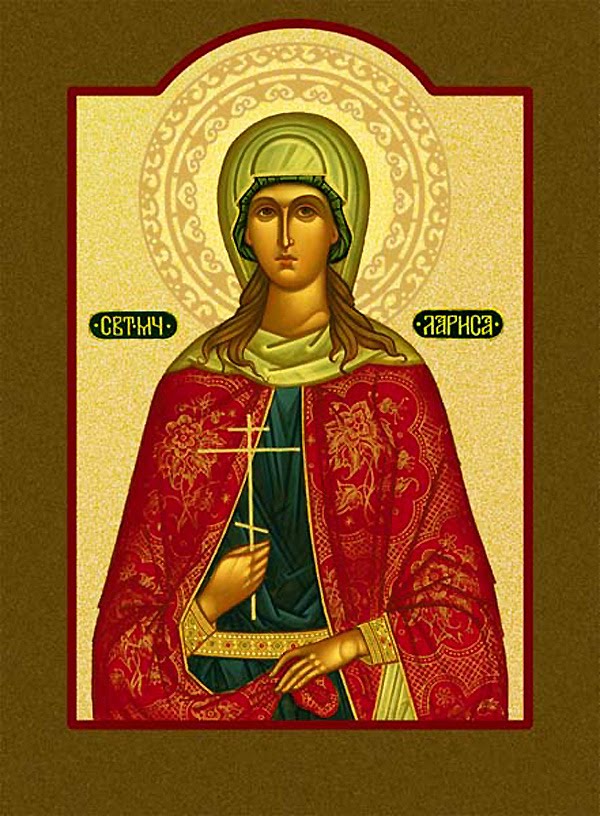
Monkmartyr Bademus (Vadim) of Persia


Commemorated on April 9

Monk Martyr Archimandrite Bademus (Vadim) was born in the fourth century in the Persian city of Bithlapata, and was descended from a rich and illustrious family. In his youth, he was enlightened with the Christian teaching. The saint gave away all his wealth to the poor and withdrew into the wilderness, where he founded a monastery. He would go up on a mountain for solitary prayer, and once was permitted to behold the Glory of God.

During this period the Persian emperor Sapor (310-381) began to persecute Christians. They arrested St Bademus and his seven disciples, and tortured them in prison, hoping that they would renounce Christ and worship the sun and fire. But St Bademus and his disciples held firmly to the Christian Faith. The confessors spent four months in jail. All this time St Bademus was a spiritual leader and support for the Christians living in Persia.

One of the associates of the emperor Sapor, Nirsanes, was a Christian and suffered imprisonment for this. He did not hold up under torture and denied Christ, promising to fulfill whatever the emperor commanded. Sapor demanded that Nirsanes personally cut off the head of St Bademus. For this he was promised a reprieve and great rewards. Nirsanes was not able to overcome his fear of new tortures, and he agreed to follow the path of betrayal walked by Judas.

When they brought St Bademus to him, he took the sword and turned toward him, but overcome by conscience, he trembled and stood petrified. St Bademus said to him, "Has your wickedness now reached this point, Nirsanes, that you should not only renounce God, but also murder His servants? Woe to you, accursed one! What will you do on that day when you stand before the Dread Judgment Seat? What answer will you give to God? I am prepared to die for Christ, but I don't want to receive death at your hands."

Nirsanes struck with the sword, but his hands shook, and he could not behead the saint immediately, and the fire-worshippers began to call him a coward. The holy martyr Bademus stood motionless, enduring many terrible blows, until the murderer succeeded in cutting off his head.

The just punishment for his misdeeds were not slow in overtaking the hapless fellow. Tormented by his conscience, he did away with himself, throwing himself on a sword. After the death of the emperor Sapor, the seven disciples of St Bademus were released from prison.
SOURCE:

SAINT OR FEAST POSTED THIS DATE 2009(with 2008's link here also):

Thursday, April 08, 2010

Martyr Pausilippus of Heraclea in Thrace


Commemorated on April 8
The Holy Martyr Pausilippus suffered under the emperor Hadrian (117-138). Denunced by the pagans, he was brought to trial before the emperor and staunchly declared himself a Christian.

They beat him with iron rods and handed over to the governor named Precius, who for a long time attempted to make the martyr offer sacrifice to idols. The martyr remained steadfast, and finally the governor gave orders to fetter him and execute him.

Along the way, St Pausilippus prayed fervently that the Lord would spare him from the hand of the executioner and grant him a quick death. The Lord heard him. The martyr, beaten up and weak, was suddenly filled with such strength that he shattered the iron fetters and freed himself. Tossing them aside, St Pausilippus thought to escape, but he died as he fled. Christians buried the body of the martyr with reverence.
SOURCE:

SAINT OR FEAST POSTED THIS DATE 2009(with 2008's link here also):

Wednesday, April 07, 2010

Martyr Rufinus the Deacon at Sinope


Commemorated on April 7

The Holy Martyr Rufinus the Deacon, the Martyr Aquilina and 200 Soldiers with them suffered in around the year 310 in the city of Sinope on the Black Sea during the reign of the emperor Maximian (305-311). When the holy deacon Rufinus was put into prison for confessing Christianity, the martyr Aquilina showed concern. Therefore, she was also placed under guard. In prison they converted 200 soldiers to Christ by their miracles, and all of them were beheaded by the sword.
SOURCE:

SAINT OR FEAST POSTED THIS DATE 2009(with 2008's link here also):

Tuesday, April 06, 2010

St Platonida (Platonis) of Nisibis, Syria


Commemorated on April 6
Saint Platonida was at first a deaconess, but afterwards withdrew into the Nisibis desert, where she organized a women's monastery.

The Rule of her monastery was distinguished for its strictness. The sisters partook of food only once a day. When they were not praying, they spent their time in monastic labors and various obediences.

On Fridays, the day commemorating the sufferings of Christ the Savior on the Cross, all work stopped, and the monks were in church from morning until evening, where between services they read from Holy Scripture and from commentaries on it.

St Platonida was for all the sisters a living example of strict monastic asceticism, meekness, and love for neighbor. Having reached a great old age, St Platonida died peacefully in the year 308.
SOURCE:

SAINT OR FEAST POSTED THIS DATE 2009(with 2008's link here also):

Monday, April 05, 2010

St Plato the Confessor of Studion


Commemorated on April 5

Saint Platon was born in the year 735 into a pious Christian family of the parents, Sergius and Euphemia. Orphaned early on, the boy was taken to be raised by relatives, who gave him a fine education. When he grew up, he began life on his own. The saint occupied himself in the first years in the management of the property which his parents had left him upon their death. He was very temperate and hard-working and acquired great wealth by his toil. However, the future monk's heart blazed with love for Christ. He gave away all his property, set his servants free and withdrew into a monastery named "Ensymboleion" near Mount Olympos.

His prayerful zeal, love of work and geniality won him the love of the brethren. When he was not praying he copied service books, and compiled anthologies from the works of the holy Fathers.

When the head of the monastery Theoctistus died in 770, the brethren chose St Platon as igumen, even though he was only thirty-five years old. After the death of the emperor Constantine Kopronymos (775), St Platon went to Constantinople. He resigned from the administration of the Metropolitan of Nicomedia. In 782, he withdrew to the desolate place of Sokudion with his nephews Sts Theodore (November 11) and Joseph (January 26). On the mount they built a church in honor of the holy Apostle John the Theologian, and founded a monastery, whose Superior was St Platon.

When Saint Tarasius and the empress Irene convened the Seventh Ecumenical Council in Nicea in 787, St Platon took an active part in its work. Being learned in Holy Scripture, he successfully unmasked the error in the Iconoclast heresy and defended the veneration of holy icons. When St Platon approached old age, he transferred the administration of the monastery to St Theodore.

In 795 the emperor Constantine VI (78-797) forced his wife to become a nun, and he married one of his relatives, Theodota.

Even though the holy Patriarch Tarasius condemned this marriage, Joseph, a prominent priest of Constantinople, violated the Patriarch's prohibition and celebrated the marriage of the emperor.

When they learned of this, Sts Platon and Theodore excommunicated the emperor from the Church and sent a letter about this to all the monks. The enraged emperor gave orders to lock St Platon in prison and to banish St Theodore to Thessalonica. Only after the death of the emperor in 797 did they receive their freedom. St Theodore settled in Constantinople and became igumen of the Studion monastery. St Platon lived as a simple monk at this monastery under the obedience of his nephew.

When the new emperor Nicephorus (802-811) returned the excommunicated priest Joseph to the Church on his own authority, Sts Platon and Theodore again came forward denouncing the unlawful activities of the emperor. For this the brave confessors were again subjected to punishment in 807. They were jailed for four years. St Platon was freed from imprisonment in 811 after the death of the emperor, and he returned to the Studion monastery.

He lived three more years at work and prayer, and departed to the Lord on Lazarus Saturday at age 79, on April 8, 814. St Platon is honored as a Confessor because of his fearless defense of the holy icons.
SOURCE:

SAINT OR FEAST POSTED THIS DATE 2009(with 2008's link here also):

Sunday, April 04, 2010

Venerable George of Mt. Maleon in the Peloponnesus


Commemorated on April 4

Saint George lived during the ninth century. His parents arranged a marriage for him, but he refused to marry the woman they had chosen. He entered the monastery on Mount Malea in the Peloponessos, and many disciples gathered around him. He was able to see the future, and predicted his own death three years before it occurred. He fell asleep in the Lord in the sixth century.

In the service to him, St George is called an earthly angel and a wonderworker.
SOURCE:

SAINT OR FEAST POSTED THIS DATE 2009(with 2008's link here also):

Saturday, April 03, 2010

Great and Holy Saturday


Commemorated on April 3

Great and Holy Saturday is the day on which Christ reposed in the tomb. The Church calls this day the Blessed Sabbath.

"The great Moses mystically foreshadowed this day when he said: God blessed the second day. This is the blessed Sabbath This is the day of rest, on which the only-begotten Son of God rested from all His works…."

(Vesperal Liturgy of Holy Saturday)

By using this title the Church links Holy Saturday with the creative act of God. In the initial account of creation as found in the Book of Genesis, God made man in His own image and likeness. To be truly himself, man was to live in constant communion with the source and dynamic power of that image: God. Man fell from God. Now Christ, the Son of God through whom all things were created, has come to restore man to communion with God. He thereby completes creation. All things are again as they should be. His mission is consummated. On the Blessed Sabbath He rests from all His works.

THE TRANSITION

Holy Saturday is a neglected day in parish life. Few people attend the Services. Popular piety usually reduces Holy Week to one day - Holy Friday. This day is quickly replaced by another - Easter Sunday. Christ is dead and then suddenly alive. Great sorrow is suddenly replaced by great joy. In such a scheme Holy Saturday is lost.

In the understanding of the Church, sorrow is not replaced by joy; it is transformed into joy. This distinction indicates that it is precisely within death that Christ continues to effect triumph.

TRAMPLING DOWN DEATH BY DEATH

We sing that Christ is "...trampling down death by death" in the troparion of Easter. This phrase gives great meaning to Holy Saturday. Christ's repose in the tomb is an "active" repose. He comes in search of His fallen friend, Adam, who represents all men. Not finding him on earth, he descends to the realm of death, known as Hades in the Old Testament. There He finds him and brings him life once again. This is the victory: the dead are given life. The tomb is no longer a forsaken, lifeless place. By His death Christ tramples down death by death.

THE ICON OF THE DESCENT INTO HADES

The traditional icon used by the Church on the feast of Easter is an icon of Holy Saturday: the descent of Christ into Hades. It is a painting of theology, for no one has ever seen this event. It depicts Christ, radiant in hues of white and blue, standing on the shattered gates of Hades. With arms outstretched He is joining hands with Adam and all the other Old Testament righteous whom He has found there. He leads them from the kingdom of death. By His death He tramples death.

"Today Hades cries out groaning:

I should not have accepted the Man born of Mary.

He came and destroyed my power.

He shattered the gates of brass.

As God, He raised the souls I had held captive.

Glory to Thy cross and resurrection, O Lord!"

(Vesperal Liturgy of Holy Saturday)

THE VESPERAL LITURGY

The Vespers of Holy Saturday inaugurates the Paschal celebration, for the liturgical cycle of the day always begins in the evening. In the past, this service constituted the first part of the great Paschal vigil during which the catechumens were baptized in the "baptisterion" and led in procession back into the church for participation in their first Divine Liturgy, the Paschal Eucharist. Later, with the number of catechumens increasing, the first baptismal part of the Paschal celebration was disconnected from the liturgy of the Paschal night and formed our pre-paschal service: Vespers and the Liturgy of St Basil the Great which follows it. It still keeps the marks of the early celebration of Pascha as baptismal feast and that of Baptism as Paschal sacrament (death and resurrection with Jesus Christ - Romans 6).

On "Lord I Call" the Saturday Resurrectional stichiras of Tone 1 are sung, followed by the the special stichiras of Holy Saturday, which stress the death of Christ as descent into Hades, the region of death, for its destruction. But the pivotal point of the service occurs after the Entrance, when fifteen lessons from the Old Testament are read, all centered on the promise of the Resurrection, all glorifying the ultimate Victory of God, prophesied in the victorious Song of Moses after the crossing of the Red Sea ("Let us sing to the Lord, for gloriously has He been glorified"), the salvation of Jonah, and that of the three youths in the furnace.

Then the epistle is read, the same epistle that is still read at Baptism (Romans 6:3-11), in which Christ's death and resurrection become the source of the death in us of the "old man," the resurrection of the new, whose life is in the Risen Lord. During the special verses sung after the epistle, "Arise, O God, and judge the earth," the dark lenten vestments are put aside and the clergy vest in the bright white ones, so that when the celebrant appears with the Gospel the light of Resurrection is truly made visible in us, the "Rejoice" with which the Risen Christ greeted the women at the grave is experienced as being directed at us.

The Liturgy of St Basil continues in this white and joyful light, revealing the Tomb of Christ as the Life-giving Tomb, introducing us into the ultimate reality of Christ's Resurrection, communicating His life to us, the children of fallen Adam.

One can and must say that of all services of the Church that are inspiring, meaningful, revealing, this one: the Vespers and Liturgy of St Basil the Great and Holy Saturday is truly the liturgical climax of the Church. If one opens one's heart and mind to it and accepts its meaning and its light, the very truth of Orthodoxy is given by it, the taste and the joy of that new life which shines forth from the grave.

Rev. Alexander Schmemann

Troparion - Tone 2

When You did descend to death, O Life Immortal,
You did slay hell with the splendor of Your Godhead,
And when from the depths You did raise the dead,
All the Powers of Heaven cried out,
O Giver of Life, Christ our God, glory to You!

Kontakion - Tone 6


He who shut in the depths is beheld dead,
Wrapped in fine linen and spices.
The Immortal One is laid in a tomb as a mortal man.
The women have come to anoint Him with myrrh,
Weeping bitterly and crying:
"This is the most blessed Sabbath
On which Christ has fallen asleep to rise on the third day!"

SOURCE:

SOURCE FOR ICON ON RIGHT:

SAINT OR FEAST POSTED THIS DATE 2009(with 2008's link here also):

Friday, April 02, 2010

Great and Holy Friday


Commemorated on April 2

Great and Holy Friday

On Great and Holy Friday, Christ died on the Cross. He gave up His spirit with the words: "It is finished" (John 19:30). These words are better understood when rendered: "It is consummated." He had accomplished the work for which His heavenly Father had sent Him into the world. He became a man in the fullest sense of the word. He accepted the baptism of repentance from John in the Jordan River. He assumed the whole human condition, experiencing all its alienation, agony, and suffering, concluding with the lowly death on the Cross. He perfectly fulfilled the prophecy of Isaiah:

"Therefore I will divide him a portion with the great, and he shall divide the spoil with the strong; because he has poured out his soul to death, and was numbered with the transgressors; yet he bore the sins of many, and made intercession for the transgressors." (Isaiah 53:12)

The Man of Sorrows

On the Cross Jesus thus became "the man of sorrows; acquainted with grief' whom the prophet Isaiah had foretold. He was "despised and forsaken by men" and "smitten by God, and afflicted" (Isaiah 53:3-4). He became the one with "no form or comeliness that we should look at him, and no beauty that we should desire him" (Isaiah 53:2). His appearance was "marred beyond human semblance, and his form beyond that of the sons of men" (Isaiah 52:14). All these Messianic prophecies were fulfilled in Jesus as he hung from the Cross.

As the end approached, He cried: "My God, my God, why hast Thou forsaken me?" (Matthew 27:46). This cry indicated His complete identification with the human condition. He had totally embraced the despised, forsaken and smitten condition of suffering and death - alienation from God. He was truly the man of sorrows.

Yet, it is important to note that Jesus' cry of anguish from the Cross was not a sign of His loss of faith in His Father. The words which He exclaimed are the first verse of Psalm 22, a messianic Psalm. The first part of the Psalm foretells the anguish, suffering and death of the Messiah. The second part is a song of praise to God. It predicts the final victory of the Messiah.

The Formal Charges

The death of Christ had been sought by the religious leaders in Jerusalem from the earliest days of His public ministry. The formal charges made against Him usually fell into the following two categories:

1) violation of the Law of the Old Testament, e.g., breaking the Sabbath rest; 2) blasphemy: making Himself equal with God.

Matters were hastened (consummated) by the moment of truth which followed His entrance into Jerusalem on Palm Sunday. He had the people behind Him. He spoke plainly. He said that the Sabbath was made for man, and not man for the Sabbath. He chastised the scribes and Pharisees for reducing religion to a purely external affair;

"You are like whitewashed tombs, which outwardly appear beautiful, but within are full of dead men's bones and all uncleanness. So you also outwardly appear righteous to men, but within you are full of hypocrisy and iniquity" (Matthew 23:27-28).

It was the second formal charge; however, that became the basis for His conviction.

The Religious Trial

Christ's conviction and death sentence required two trials: religious and political. The religious trial was first and took place during the night immediately after His arrest. After considerable difficulty in finding witnesses for the prosecution who actually agreed in their testimony, Caiaphas, the high priest, asked Jesus the essential question: "Are you Christ, the Son of the Blessed?" Jesus, who had remained silent to this point, now responded directly:

"I am; and you will see the Son of man sitting at the right hand of power, and coming with the clouds of heaven" (Mark 14:61-62).

Jesus' reply recalled the many other statements He had made beginning with the words, "I am." "I am the bread of life . . . I am the light of the world. . . I am the way, the truth, and the life. . . before Abraham was, I am." (John 6 through 15). The use of these words themselves was considered blasphemous by the religious leaders. The words were the Name of God. By using them as His own Name, Jesus positively identified Himself with God. From the burning bush the voice of God had disclosed these words to Moses as the Divine Name: "Say this to the people of Israel, 'I AM has sent me to you'" (Exodus 3:13-14).

Now Jesus, as He had done on many other occasions, used them as His own Name. The high priest immediately tore his mantle and "they all condemned Him as deserving death" (Mark 14:64). In their view He had violated the Law of the Old Testament:

"He who blasphemes the name of the Lord shall be put to death" (Leviticus 24:16).

The Political Trial

The Jewish religious leaders lacked the actual authority to carry out the above law: to put a man to death. Such authority belonged to the Roman civil administration. Jesus had carefully kept His activity free of political implications. He refused the temptation of Satan to rule the kingdoms of the world by the sword (Luke 4: 1-12). He often charged His disciples and others to tell no one that He was , the Christ, because of the political overtones that this title carried for many (Matthew 16: 13-20). He rebuked Peter, calling him Satan, when the disciple hinted at His swerving from the true nature of His mission (Matthew 16:23). To Pilate, the spineless and indifferent Roman Governor, He said plainly: "My kingdom is not of this world" (John 18:36). Jesus was not a political revolutionary who came to free the people from Roman control and establish a new kingdom based on worldly power.

Nevertheless, the religious leaders, acting in agreement with the masses, devised political charges against Him in order to get their way. They presented Christ to the Romans as a political , leader, the "King of the Jews" in a worldly sense, a threat to Roman rule and a challenge to Caesar. Pilate became fearful of his own position as he heard the charges and saw the seething mobs. Therefore, despite his avowed testimony to Jesus' innocence, he passed formal sentence, "washed his hands" of the matter, and turned Jesus over to be crucified (John 19:16).

Crucifixion - The Triumph of Evil

Before succumbing to this cruel Roman method of executing political criminals, Jesus suffered still other injustices. He was stripped, mocked and beaten. He wore a "kingly" crown of thorns on His head. He carried His own cross. He was finaIly nailed to the cross between two thieves at a place called Golgotha (the place of the skull) outside Jerusalem. An inscription was placed above His head on the Cross to indicate the nature of His crime: "Jesus of Nazareth, the King of the Jews." He yielded up His spirit at about the ninth hour (3 p.m.), after hanging on the Cross for about six hours.

On Holy Friday evil triumphed. "It was night" (John 13:30) when Judas departed from the Last Supper to complete his act of betrayal, and "there was darkness over all the land" (Matthew 27:45) when Jesus was hanging on the Cross. The evil forces of this world had been massed against Christ. Unjust trials convicted Him. A criminal was released to the people instead of Him. Nails and a spear pierced His body. Bitter vinegar was given to Him to quench His thirst. Only one disciple remained faithful to Him. Finally, the tomb of another man became His place of repose after death.

The innocent Jesus was put to death on the basis of both religious and political charges. Both Jews and Gentile Romans participated in His death sentence.

"The rulers of the people have assembled against the Lord and His Christ." (Psalm 2 - the Prokeimenon of the Holy Thursday Vesperal Liturgy)

We, also, in many ways continue to participate in the death sentence given to Christ. The formal charges outlined above do not exhaust the reasons for the crucifixion. Behind the formal charges lay a host of injustices brought, on by hidden and personal motivations. Jesus openly spoke the truth about God and man. He thereby exposed the false character of the righteousness and smug security, both religious and material, claimed by many especially those in high places. The constantly occurring expositions of such smugness in our own day teach us the truly illusory nature of much so-called righteousness and security. In the deepest sense, the death of Christ was brought about by hardened, personal sin - the refusal of people to change themselves in the light of reality, which is Christ.

"He came to His very own, and His own received Him not" (John 1:11).

Especially we, the Christian people, are Christ's very own. He continues to come to us in His Church. Each time we attempt to make the Church into something other than the eternal coming of Christ into our midst, each time we refuse to repent for our wrongs; we, too, reject Christ and participate in His death sentence.

The Vespers

The Vespers, celebrated in the Church on Holy Friday afternoon, brings to mind all of the final events of the life of Christ as mentioned above: the trial, the sentence, the scourging and mocking, the crucifixion, the death, the taking down of His body from the Cross, and the burial. As the hymnography indicates, these events remain ever-present in the Church; they constitute the today of its life.

The service is replete with readings from Scripture: three from the Old Testament and two from the New. The first of the Old Testament readings, from Exodus, speaks of Moses beholding the "back" of the glory of God - for no man can see the glory of God face to face and live. The Church uses this reading to emphasize that now, in the crucifixion and death of Christ, God is making the ultimate condescension to reveal His glory to man - from within man himself.

The death of Christ was of a wholly voluntary character. He dies not because of some necessity in His being: as the Son of God He has life in Himself! Yet, He voluntarily gave up His life as the greatest sign of God's love for man, as the ultimate revelation of the Divine glory:

"Greater love has no man than this, that a man lay down his life for his friends" (John 15:13).

The vesperal hymnography further develops the fact that God reveals His glory to us in this condescending love. The Crucifixion is the heart of such love, for the One being crucified is none other than He through whom all things have been created:

Today the Master of creation stands before Pilate. Today the Creator of all is condemned to die on the cross. . . The Redeemer of the world is slapped on the face. The Maker of all is mocked by His own servants. Glory to Thy condescension, 0 Lover of man! (Verse on "Lord I call", and the Apostikha)

The verses also underscore the cosmic dimensions of the event taking place on the Cross. Just as God who revealed Himself to Moses is not a god, but the God of "heaven and earth, and of all things visible and invisible," so the death of Jesus is not the culmination of a petty struggle in the domestic life of Palestine. Rather, it is the very center of the epic struggle between God and the Evil One, involving the whole universe:

All creation was changed by fear when it saw Thee hanging on the cross, 0 Christ! The sun was darkened, and the foundations of the earth were shaken. All things suffered with the Creator of all. 0 Lord, who didst willingly endure this for us, glory to Thee! (Verse I on 'Lord, I Call')

The second Reading from the Old Testament (Job 42:12 to the end) manifests Job as a prophetic figure of the Messiah Himself. The plight of Job is followed in the services throughout Holy Week, and is concluded with this reading. Job is the righteous servant who remains faithful to God despite trial, humiliation, and the loss of all his possessions and family. Because of his faithfulness, however, "The Lord blessed the latter days of Job more than his beginning" (Job 42: 12)

The third of the Old Testamental readings is by far the most substantial (Isaiah 52:13 to 54:1). It is a prototype of the Gospel itself. Read at this moment, it positively identifies Jesus of Nazareth as the Suffering Servant, the Man of Sorrows; the Messiah of Israel.

The Epistle Reading (I Corinthians 1:18 to 2:2) speaks of Jesus crucified, a folly for the world, as the real center of our Faith. The Gospel reading, a lengthy composite taken from Matthew, Luke and John, simply narrates all the events associated with the crucifixion and burial of Christ.

All the readings obviously focus on the theme of hope. As the Lord of Glory, the fulfillment of the righteous Job, and the Messiah Himself, humiliation and death will have no final hold over Jesus. Even the parental mourning of Mary is transformed in the light of this hope:

When she who bore Thee without seed saw Thee suspended upon the Tree, 0 Christ, the Creator and God of all, she cried bitterly: "Where is the beauty of Thy countenance, my Son? I cannot bear to see Thee unjustly crucified. Hasten and arise, that I too may see Thy resurrection from the dead on the third day! (Verse IV on "Lord I call.")

Near the end of the Vespers, the priest vests fully in dark vestments. At the appointed time he lifts the Holy Shroud, a large icon depicting Christ lying in the tomb, from the altar table. Together with selected laymen and servers, a procession is formed and the Holy Shroud is carried to a specially prepared tomb in the center of the church. As the procession moves, fhe troparion is sung:

The Noble Joseph, when he had taken down Thy most pure body from the tree, wrapped it in fine linen and anointed it with spices, and placed it in a new tomb.

At this ultimate solemn moment of Vespers, the theme of hope once again occurs - this time more strongly and clearly than ever. As knees are bent and heads are bowed, and often tears are shed, another troparion is sung which penetrates through this triumph of evil, to the new day which is contained in its very midst:

The Angel came to the myrrh-bearing women at the tomb and said: "Myrrh is fitting for the dead, but Christ has shown Himself a stranger to corruption.

A new Age is dawning. Our salvation is taking place. The One who died is the same One who will rise on the third day, to "trample down death by death," and to free us from corruption.

Therefore, at the conclusion of Holy Friday Vespers, at the end of this long day of darkness, when all things are apparently ended, our eternal hope for salvation springs forth. For Christ is indeed a stranger to corruption:

"As by a man came death, by a man has come also the resurrection of the dead. For as in Adam all die, so also in Christ shall all be made alive. But each in his own order: Christ the first fruits, then at his coming those who belong to Christ." (I Cor. 15:21-32)

"If any man would come after me, let him deny himself and take up his cross and follow me. For whoever would save his life will lose it, and whoever loses his life for my sake and the gospel's will save it." (Mark 8:35)

- Father Paul Lazor

 Troparion - Tone 2

The Noble Joseph,
When he had taken down Your most pure Body from the tree,
Wrapped it in fine linen,
And anointed it with spices,
And placed it in a new tomb.

Troparion - Tone 2


The angel came to the myrrh-bearing women at the tomb and said:
Myrrh is fitting for the dead,
But Christ has shown Himself a stranger to corruption.

Kontakion - Tone 8

Come, let us all sing the praises of Him who was crucified for us,
For Mary said when she beheld Him upon the tree:
Though You do endure the cross, You are my Son and my God!

SOURCE:

SOURCE FOR ICON ON RIGHT:

SAINT OR FEAST POSTED THIS DATE 2009(with 2008's link here also):

Thursday, April 01, 2010

Martyr Abraham of Bulgaria


Commemorated on April 1

The Holy Martyr Abraham the Bulgar, Vladimir Wonderworker, lived during the thirteenth century, and was descended from the Kamska Bulgars and brought up as a Moslem. He was good and kindly towards the destitute, and when the Lord enlightened him with the light of reason, he accepted Christianity.

In the city of Bolgara, on the lower stretches of the Volga, St Abraham began to preach to his fellow countrymen about the true God. They seized him and tried to force him to renounce Christ, but the saint remained firm in his confession. They tortured the martyr fiercely and for a long while, but he endured everything with unshakable patience.

On April 1, 1229 they quartered the holy Martyr Abraham, and then cut off his venerable head. Russian Christians living in the city buried the saint's body in the Christian cemetery. On March 6, 1230, the relics of St Abraham were transferred by the Great Prince St George Vsevolodovich of Vladimir (February 4) to the Dormition cathedral of the Knyaginin (Princess) monastery. His memory began to be celebrated from that time.
SOURCE:

SAINT OR FEAST POSTED THIS DATE 2009(with 2008's link here also):

And now for something serious. For your consideration.

Sunday begins the Great Fast:  I'm fasting from vegetables, soups, tofu, soy products...

The ingredients HAVE to have meat, dairy, eggs or I'm passing it by.  For instance, if I pick up a cucumber, I'm going to read the ingredients.  If it is not meat/dairy/or egg filled, that is one sorry cucumber.  They shouldn't make it that way.

(I posted the above on Facebook and it drew a response from a fellow Orthodox Christian, Christopher Barton, who attends my parish.  The following is a record of our conversation):

Sophocles said: 
As well, things that live in the water are gonna have to work hard for awhile to make it on my plate.

Christopher said: 
We need foods made with real carnivore ingredients. I'm already planning on acting a fool at a churrascaria.

Sophocles said: 
Dude, I feel ya. Are you gonna let the meat fall out of your mouth onto your chin and shirt?

Christopher said:

I don't want to force it, I'll just let the meat go wherever it will. The only plan is to eat until I have to wonder how I'll be able to move to make it home from the restaurant.
Sophocles said:
Well said. I guess I was being silly. Still, putting a few eggs in your pockets and some mozzarella sticks on each ear(instead of cigarettes-those are unhealthy) as you walk out should still be within the pale of good taste. Hmm...maybe I'll join you.

Christopher said:
That reminds me, whilst we all prepare for meat gorging I don't want to leave out the pillaging I am going to do to sweet, sweet dairy. Especially dairy paired with meat, I'm looking at you Pasticcio.

Sophocles said:
Not mine, I hope! I'm defending my Pasticcio!

Oh wait, we can just make sure there is a-plenty for the both of us.(Forgive me, I overreacted. I temporarily forgot the Fast is ending).

Dairy coupled with meat...what a novel idea. Pasta with meat sauce with parmesan cheese on top? Meat Lover's Delight Pizza? We shouldn't think small on this matter.
Christopher said:
One thing I have learned about Pasticcio, there is NEVER enough or plenty.

We could do pasta, on top of meat... then some sort of cream sauce? I agree, we need to run this thing to be as big as possible. Pizza is definitely on my extensive Bright Week hit list.

Sophocles said:
I like the way you think. I can see our friendship growing because you are a very wise man.

Andrew said:
Soph I am not sure if you can handle the pressure of Bright Week, I think your body and soul is too weak and you will give in to the temptations of vegetables, but if you do, stand up and repent......


Sophocles said:
Andrew, thank you. I will. Ahead of time, if I do fall, I'm asking you to be my "meat spiritual father". I may have to lean on your wisdom in this area.


Wednesday, March 31, 2010

Venerable Hypatius the Healer of the Kiev Caves


Commemorated on March 31

Saint Hypatius the Healer of the Caves, attained glory through his severe fasting and prayerful vigilance. By night he stood at prayer, slept very little, and ate only bread and water.

St Hypatius devoted himself entirely to the service of the sick, and received from God the gift of healing. Those sick with various illnesses often hastened to his prayerful intercession.

The memory of St Hypatius is celebrated also on August 28, on the Synaxis of the Saints of the Far Caves.


SOURCE:

SAINT OR FEAST POSTED THIS DATE 2009(with 2008's link here also):

Tuesday, March 30, 2010

St Sophronius the Bishop of Irkutsk


Commemorated on March 30

Saint Sophronius, Bishop of Irkutsk and Wonderworker of all Siberia, whose family name was Kristalevsky, was born in Malorussia in the Chernigov region in 1704. His father, Nazarius, was "a common man in his affairs, and the saint was named Stephen, in honor of the protomartyr St Stephen. He had two brothers and a sister, Pelagia. The name of one brother was Paul. The name of the other older brother is unknown, but it is said that he was head of the Krasnogorsk Zolotonosh monastery.

Stephen's childhood years were spent in the settlement of Berezan in the Pereyaslavl district of the Poltava governance, where the family settled after the father was discharged from service. When he came of age, Stephen entered the Kiev Theological Academy, where two other future hierarchs were studying: Joasaph, future Bishop of Belgorod (September 4 and December 10), and Paul, future Metropolitan of Tobolsk (June 10 and November 4).

After completing his religious education, Stephen entered the Krasnogorsk Transfiguration monastery (later renamed the Protection monastery. In 1789, it was transformed into a women's monastery), where his elder brother already labored in asceticism. On April 23, 1730 he received monastic tonsure with the name of Sophronius, in honor of St Sophronius of Jerusalem (March 11).

On the night after his monastic tonsure, St Sophronius heard a Voice in the Protection church predicting his future service: "When you become bishop, build a church dedicated to All Saints."

In 1732, he was summoned to Kiev. There he was ordained hierodeacon, and then hieromonk in the cathedral of Holy Wisdom. After St Sophronius had been a monk for two years, he became treasurer of the Zolotonosh monastery for two years, and then His Grace Bishop Arsenius (Berlov) of the Pereyaslavl diocese sent him into the house of his archbishop, where he was steward for eight years.

These facts testify to the connections of the saint with his original Protection monastery. During his obedience under the presiding hierarch at Pereyaslavl, he often visited his monastery, spending the day in quiet contemplation and work, serving as an example to the brethren.

When Hieromonk Sophronius traveled to the Holy Synod on behalf of his bishop, they paid close attention to him. In January 1742, the future saint was transferred to the St Alexander Nevsky Lavra in St Peterburg, the foremost monastery of the capital. A year later he was appointed treasurer of the monastery, and in 1746 he was appointed as Superior of the monastery.

He summoned his fellow countryman, the hieromonk Sinesios (Ivanoff), a native of the city of Priluki, and made him igumen of the St Sergius Hermitage, a dependancy of St Alexander Nevsky Lavra. From this time the friendship of the two ascetics, hieromonk Sophronius and hieromonk Sinesios, was strengthened by their joint pastoral effort, and they were inseparable until they died in Siberia.

During these years St Sophronius worked hard at managing the monastery and improvement of teaching at the seminary located nearby. He and Archbishop Theodosius made it their task to acquire more books for the monastic library.

St Sophronius built a two storey church: the upper church was dedicated to St Theodore, the older brother of St Alexander Nevsky; and the lower to St John Chrysostom.

Bishop Innocent II (Nerunovich) of Irkutsk died in 1747. For six years afterwards, the Irkutsk diocese remained without a spiritual head.

Finally, on February 23, 1753, the empress Elizabeth (1741-1761) recommended the pious Igumen Sophronius of the Alexander Nevsky monastery to the Holy Synod as "a person, not only worthy of episcopal rank, but also someone completely able to fulfill the wishes and the hopes of the state and the Synod, and take up the burden of episcopal service on the far frontier and satisfy the needs of his flock in that harsh land, among wild primitives and lawless people."

On April 18, 1753, Thomas Sunday, Hieromonk Sophronius was consecrated Bishop of Irkutsk and Nerchinsk in the Dormition cathedral.

Foreseeing difficult service on the distant Siberian frontier, the new bishop did not immediately travel to the Irkutsk eparchy, but rather began to gather educated and spiritually experienced co-workers. During this period St Sophronius visited at his original Krasnogorsk monastery. At the holy places of Kiev, he also sought the blessings of the Kiev Caves Saints for his service. The constant companion of the saint, as had been before, was the hieromonk Sinesios, sharing in his friend's work.

At Moscow, Archbishop Platon of Moscow and Sevsk provided him with further assistance. He gave him fatherly advice for his task, since he was quite familiar with the peculiarities of the Siberian religious life. He forewarned him about the self-willed local authorities, and advised him to surround himself with trustworthy helpers.

On March 20, 1754 the saint arrived at Irkutsk. He went first to the Ascension monastery, his predecessor's residence, and prayed at the grave of Bishop Innocent (Kulchitz), asking his blessing as he took up his assignment.

Familiarizing himself with the state of affairs in the diocese, the saint began the reorganization of the Spiritual consistory, monasteries and parishes, and appealed to the Holy Synod to send worthy men to the Irkutsk eparchy for priestly service.

Before the arrival of St Sophronius, the Irkutsk monasteries had already a century-old history. The founders of these monasteries were motivated by a fervent desire for monastic life. The wise hierarch appointed people of piety, wisdom, virtue, and with great experience both of life and spiritual matters as heads of the monastic communities. In 1754, Bishop Sophronius elevated his friend and companion Hieromonk Sinesios to be Archimandrite of Ascension monastery. He served the monastery for thirty-three years until his blessed repose.

In September 1754, the bishop issued a decree in which he expressed concern for the education and upbringing of the children of the clergy. He wanted them to learn the HOROLOGION, the PSALTER, singing and letters, and this instruction "ought to be conducted with all industriousness and the utmost diligence, so that the children might be able to fulfill the responsibilities of sacristan and deacon."

Studying both people and circumstances, the bishop in his sermons and conversations exhorted all to a higher moral ideal. He devoted particular attention to the reverent and correct performance of the divine services and the Holy Mysteries, and he also looked after the moral purity of laymen. He was concerned about the position of women in the family, and defended them against their unjust inequality. The bishop attempted to set straight the Rule of divine services, and so he summoned priests, deacons, subdeacons and sacristans, and those who sang in the choir during services.

Traveling about the diocese, the saint noticed that censing and the ringing of bells were not being done properly in all places, and therefore he issued a decree restoring the proper way of censing and bell-ringing.

Called to apostolic service in this frontier region, St Sophronius realized that his duty was to enlighten the Christians of the area, and also to convert the idol-worshippers, who were very numerous in Siberia.

It was difficult to bring pagans to the Church of Christ, especially because sometimes there was no one to serve in the churches, and to borrow priests for missionary activity only made matters worse. Knowing that the Church services would have a salutary effect on non-Russians, the saint not only served with reverence himself, but also required it of all his clergy.

St Sophronius also contributed to the development of a stable culture among the local people. He offered them monastic lands for settlements and in every way he endeavored to isolate them from the influence of paganism. A constant throng of visitors came from faraway places for his blessing.

Even with his many cares, he did not forget his own spiritual life and eternity. He also led an ascetical life. His cell-attendant said that the saint "used simple food in small quantities. He served often, spent the greater part of the night at prayer, sleeping on the floor under a sheepskin or a fur, a deerskin or bear hide, and a small simple pillow.

The spirit of his ascetic life fit in with the general uplifting of the Christian spirit in Russia after the glorification of St Demetrius of Rostov (September 21), Theodosius of Chernigov (September 9), and the uncovering of the incorrupt relics of his predecessor, St Innocent of Irkutsk (February 9). This event inspired St Sophronius to greater efforts and encouraged him to ask for the help of St Innocent in his task of building up the diocese.

Until the end of his days St Sophronius kept his love for the Krasnogor Zolotonosh monastery, which had nurtured him in the days of his youth. He constantly contributed support for its upkeep, sending the necessary means for this.

Noticing a deterioration in his health, St Sophronius petitioned the Holy Synod to let him retire. The answer from Peterburg did not come right away, since it was difficult to choose a worthy successor.

The final days of St Sophronius' s life were spent in asceticism and prayer.

The light, which shone on the good deeds of St Sophronius, continues to the present time to testify to the glory of the Heavenly Father, "Who mercifully strengthens His saints." Now the holy memory of St Sophronius is reverently preserved not only in Siberia at the place of his final deeds, but also at the place of his first deeds.

St Sophronius is also commemorated on June 30 (his glorification in 1918).
SOURCE:

SAINT OR FEAST POSTED THIS DATE 2009(with 2008's link here also):

Monday, March 29, 2010

Venerable John the Anchorite of Egypt


Commemorated on March 29

Saint John the Anchorite: During a persecution against Christians, the devout widow Juliania of Armenia hid from pursuers together with her two young children John and Themistea. She taught her children to pray and to read the Holy Scriptures.

From time to time John secretly visited a nearby monastery, thereby placing himself in danger. Once, a pious old man advised him to find a more secluded place for prayer. Returning home, the saint told his mother that he was going to visit the Elder. Thinking that her son would soon return, she let him go.

John went to the desert-dweller Pharmutios and received his blessing to live alone in the wilderness. The young ascetic found an abandoned well, which was filled with snakes, scorpions and other vile creatures. He lowered himself into the well and lived there for ten years in fasting, vigil, and prayer.

The angel who brought food to the hermit Pharmutios also brought bread for St John. The angel did not bring the bread directly to John, however, lest the young ascetic become filled with pride. Food was sent to him through his spiritual Father, Pharmutios.

St John had many temptations from the devil to test him. Demons assumed the appearance of his mother, his sister, his relatives and acquaintances in order to sadden the ascetic and compel him to give up his ascetic struggles. With tears they approached the well one after the other, begging St John to leave with them. All this time the saint did not cease to pray. Finally he said, "Be gone from me," and the demons vanished.

St John lived in the well until the time of his blessed repose. Through God's providence St Chrysikhios, who had struggled in the desert for thirty years, came to bury him. On the eve of his repose, St John told Chrysikhios of his life and struggles for salvation. After his death, numerous miracles occurred at the place of his ascetic deeds.


SOURCE:


SAINT OR FEAST POSTED THIS DATE 2009(with 2008's link here also):

Sunday, March 28, 2010

Monkmartyr Eustratius of the Kiev Near Caves


Commemorated on March 28

Martyr Eustratius of the Caves was born in the eleventh century at Kiev into a wealthy family. As an adult, he received monastic tonsure at the Kiev Caves monastery, after giving away all his possesions to the poor. St Eustratius humbly underwent obediences at the monastery, strictly fulfilling the rule of prayer and passing his days in fasting and vigilance.

In 1096 the Polovetsians captured Kiev and ravaged the monastery of the Caves, doing away with many of the monks. St Eustratius was taken into captivity, and was sold into slavery with thirty monastic laborers and twenty inhabitants of Kiev to a certain Jew living in Korsun.

The impious Jew tried to make the captives to deny Christ, threatening to kill those who refused by starving them. St Eustratius encouraged and exhorted his brother Christians, "Brothers! Let none of us who are baptized and believe in Christ betray the vows made at Baptism. Christ has regenerated us through water and the Spirit. He has freed us from the curse of the Law by His Blood, and He has made us heirs of His Kingdom. If we live, we shall live for the Lord. If we die, we shall die in the Lord and inherit eternal life."

Inspired by the saint's words, the captives resolved to die of starvation, rather than renounce Christ, Who is the food and drink of Eternal Life. Exhausted by hunger and thirst, some captives perished after three days, some after four days, and some after seven days. St Eustratius remained alive for fourteen days, since he was accustomed to fasting from his youth. Suffering from hunger, he still did not touch food nor water. The impious Jew, seeing that he had lost the money he had paid for the captives, decided to take revenge on the holy monk.

The radiant Feast of the Resurrection of Christ drew near, and the Jewish slave owner was celebrating the Jewish Passover with his companions. He decided to crucify St Eustratius. The cruel tormentors mocked the saint, offering to let him share their Passover meal. The Martyr replied, "The Lord has now bestown a great grace upon me. He has permitted me to suffer on a cross for His Name just as He suffered." The saint also predicted a horrible death for the Jew.

Hearing this, the enraged Jew grabbed a spear and stabbed St Eustratius on the cross. The martyr's body was taken down from the cross and thrown into the sea. Christian believers long searched for the holy relics of the martyr, but were not able to find them. But through the Providence of God the incorrupt relics were found in a cave and worked many miracles. Later, they were transferred to the Near Caves of the Kiev Caves monastery.

The prediction of the holy Martyr Eustratius that his blood would be avenged was fulfilled soon after his death. The Byzantine Emperor issued a decree expelling all Jews from Korsun, depriving them of their property, and putting their elders to death for torturing Christians. The Jew who crucified St Eustratius was hanged on a tree, receiving just punishment for his wickedness.
SOURCE:

SAINT OR FEAST POSTED THIS DATE 2009(with 2008's link here also):

Saturday, March 27, 2010

The Raising of Lazarus (Lazarus Saturday)


Commemorated on March 27

Lazarus Saturday and Palm Sunday

Visible triumphs are few in the earthly life of our Lord Jesus Christ. He preached a kingdom "not of this world." At His nativity in the flesh there was "no room at the inn." For nearly thirty years, while He grew "in wisdom and in stature, and in favor with God and man" (Luke 2:52), He lived in obscurity as "the son of Mary." When He appeared from Nazareth to begin His public ministry, one of the first to hear of Him asked: "Can anything good come out of Nazareth?" (John I :46). In the end He was crucified between two thieves and laid to rest in the tomb of another man.

Two brief days stand out as sharp exceptions to the above - days of clearly observable triumph. These days are known in the Church today as Lazarus Saturday and Palm Sunday. Together they form a unified liturgical cycle which serves as the passage from the forty days of Great Lent to Holy Week. They are the unique and paradoxical days before the Lord's Passion. They are days of visible, earthly triumph, of resurrectional and messianic joy in which Christ Himself is a deliberate and active participant. At the same time they are days which point beyond themselves to an ultimate victory and final kingship which Christ will attain not by raising one dead man or entering a particular city, but by His own imminent suffering, death and resurrection.

By raising Lazarus from the dead before Thy Passion, Thou didst confirm the universal resurrection, 0 Christ God! Like the children with the palms of victory, we cry out to Thee, 0 Vanquisher of Death: Hosanna in the highest! Blessed is He that comes in the name of the Lord! (Troparion of the Feast, sung on both Lazarus Saturday and Palm Sunday)

Lazarus Saturday

In a carefully detailed narrative the Gospel relates how Christ, six days before His own death, and with particular mindfulness of the people "standing by, that they may believe that thou didst send me" (John I I :42), went to His dead friend Lazarus at Bethany outside of Jerusalem. He was aware of the approaching death of Lazarus but deliberately delayed His coming, saying to His disciples at the news of His friend's death: "For your sake I am glad that I was not there, so that you may believe" (John 11:14).

When Jesus arrived at Bethany, Lazarus was already dead four days. This fact is repeatedly emphasized by the Gospel narrative and the liturgical hymns of the feast. The four-day burial underscores the horrible reality of death. Man, created by God in His own image and likeness, is a spiritual-material being, a unity of soul and body. Death is destruction; it is the separation of soul and body. The soul without the body is a ghost, as one Orthodox theologian puts it, and the body without the soul is a decaying corpse. "I weep and I wail, when I think upon death, and behold our beauty, fashioned after the image of God, lying in the tomb dishonored, disfigured, bereft of form." This is a hymn of St John of Damascus sung at the Church's burial services. This "mystery" of death is the inevitable fate of man fallen from God and blinded by his own prideful pursuits.

With epic simplicity the Gospel records that, on coming to the scene of the horrible end of His friend, "Jesus wept" (John 11:35). At this moment Lazarus, the friend of Christ, stands for all men, and Bethany is the mystical center of the world. Jesus wept as He saw the "very good" creation and its king, man, "made through Him" (John 1:3) to be filled with joy, life and light, now a burial ground in which man is sealed up in a tomb outside the city, removed from the fullness of life for which he was created, and decomposing in darkness, despair and death. Again as the Gospel says, the people were hesitant to open the tomb, for "by this time there will be an odor, for he has been dead four days" (John 11:39).

When the stone was removed from the tomb, Jesus prayed to His Father and then cried with a loud voice: "Lazarus, come out." The icon of the feast shows the particular moment when Lazarus appears at the entrance to the tomb. He is still wrapped in his grave clothes and his friends, who are holding their noses because of the stench of his decaying body, must unwrap him. In everything stress is laid on the audible, the visible and the tangible. Christ presents the world with this observable fact: on the eve of His own suffering and death He raises a man dead four days! The people were astonished. Many immediately believed on Jesus and a great crowd began to assemble around Him as the news of the raising of Lazarus spread. The regal entry into Jerusalem followed.

Lazarus Saturday is a unique day: on a Saturday a Matins and Divine Liturgy bearing the basic marks of festal, resurrectional services, normally proper to Sundays, are celebrated. Even the baptismal hymn is sung at the Liturgy instead of Holy God: "As many as have been baptized into Christ, have put on Christ."

Very Rev. Paul Lazor

Troparion - Tone 1

By raising Lazarus from the dead before Your passion,
You did confirm the universal Resurrection, O Christ God!
Like the children with the palms of victory,
We cry out to You, O Vanquisher of death;
Hosanna in the Highest!
Blessed is He that comes in the Name of the Lord!

Kontakion - Tone 2

Christ the Joy, the Truth and the Light of all,
The Life of the World and the Resurrection
Has appeared in His goodness, to those on earth.
He has become the Image of our Resurrection,
Granting divine forgiveness to all!

SOURCE:

SOURCE FOR ICON ON RIGHT:

SAINT OR FEAST POSTED THIS DATE 2009(with 2008's link here also):

Friday, March 26, 2010

Martyr Larissa the laywoman in the Crimea


Commemorated on March 26

Saint Larissa (Beride) was one of twenty-six martyrs who were killed by the Goths around the year 375 under Jungerich, a persecutor of Christians. Ancient synaxaria of the Gothic Church recount the martyrdom of twenty-six Christians in the time of the emperors Valentinian, Valens, and Gratian. The historian Sozomen says that King Athanaric was enraged to see his subjects embracing Christianity because of the preaching of the Arian bishop Ulfilas. So, he ordered many of them to be tortured and executed, often without a trial.

King Athanaric's ministers placed a statue in a chariot and paraded it before the tents which Christians used for church services. Those who worshiped the idol and offered sacrifice were spared, the rest were burned alive in the tent. Jungerich gave orders to burn down a church during divine services. In the fiery inferno 308 people perished, of whom only twenty-one are known by name. There was also an anonymous man who came to the tent and confessed Christ. He was martyred with the others. Different manuscripts give variants of their names.

In the reign of Valentinian and Theodosius (383-392), the Gothic king's widow Gaatha (who was an Orthodox Christian) and her daughter Duclida gathered up the relics of the holy martyrs and brought them to Syria with the help of some priests and a layman named Thyellas. Gaatha later returned to her native land, where she was stoned and died as a martyr, along with her son Agathon.

The relics of the holy martyrs were left to Duclida, who went to Cyzicus in Asia Minor and gave some of the relics for the founding of a church. St Duclida died in peace.

The holy martyrs were commemorated on October 23 on the Gothic calendars.
SOURCE:

SAINT OR FEAST POSTED THIS DATE 2009(with 2008's link here also):

Tuesday, March 23, 2010

Martyred 199 Disciples of the Martyr Nikon in Sicily


Commemorated on March 23

Quintilian, the governor of Sicily, was informed that St Nikon was living nearby with many monks. All 199 monks were seized and beheaded during a persecution against Christians in 251. St Nikon was killed later.

The bishop of the city of Messina and his clergy buried the bodies of St Nikon and his disciples.
SOURCE:

SAINT OR FEAST POSTED THIS DATE 2009(with 2008' link here also):

Monday, March 22, 2010

Martyr Drosis the Daughter of the Emperor Trajan


Commemorated on March 22

The Holy Martyr Drosis, together with Five Virgin-Martyrs Agalida, Apollinaria, Daria, Mamthusa and Thais: St Drosis was daughter of the emperor Trajan (98-117), a fierce persecutor of Christians. In the year 99 he revived an earlier law which forbade secret gatherings and was indirectly aimed against Christians. In the year 104 he issued a special law against Christians.

Beginning in that year, the persecutions continued until the end of his reign. During this time the bodies of martyred Christians often remained unburied in order to intimidate others. Five Christian virgins: Aglaida, Apolliniaria, Daria, Mamthusa and Thais, took upon themselves the task of burying such Christians. They secretly gathered up the bodies of martyrs, anointed them with spices, wrapped them in shrouds and buried them. When she learned of this, Drosis, a secret Christian but not yet baptized, asked the holy virgins to take her with them when they went to bury Christians.

On the advice of the court dignitary Adrian, a guard was set over those who had been killed, to arrest anyone who tried to bury them. On the very first night, St Drosis and the five virgins were caught. Learning that one of the captives was his own daughter, Trajan gave orders to hold her separately, in the hope that she would change her mind.

The remaining holy virgins were sentenced to burning in a furnace for melting copper. They bravely accepted execution and were granted crowns of martyrdom. The copper, mingled with the ashes of the martyrs, was used to make tripods for a new bath of Trajan. But as long as these tripods stood in the bath-house, no man was able to enter it. Anyone crossing the threshold fell down dead. When the pagan priests realized why this happened, they advised that the tripods be removed.

Adrian told the emperor to melt the tripods and to make five statues of naked virgins, in the likeness of the Martyrs. Then he said that these statues should be placed before the entrance to the imperial bath. Trajan agreed. When the statues were set up, the emperor saw in a dream five pure lambs pastured in Paradise, and the Shepherd who said to him, "O most wanton and wicked Caesar! Those whose images you placed there to be mocked have been taken away from you and brought here by the Good and Merciful Pastor. In time your daughter, the pure lamb Drosis, shall also be here."

When he awoke, Trajan flew into a rage and ordered two huge furnaces to be heated. At the ovens an imperial edict was posted: "You who worship the Crucified, save yourselves many agonies, and spare us also from these labors. Offer sacrifice to the gods. If you do not wish to do this, however, then let each of you voluntarily cast himself into this furnace." Many Christians willingly went to martyrdom.

When she heard of this, St Drosis also decided to endure martyrdom for Christ. In her prison she offered prayers asking the Lord to release her. God heard her prayer, amd the guards fell asleep. St Drosis went off to the ovens, but began to wonder: "How can I go to God without a wedding garment (i.e., without being baptized), for I am impure. But, O King of Kings, Lord Jesus Christ, for Your sake I give up my imperial position, so that I may be the lowliest handmaiden in Your Kingdom. Baptize me Yourself with your Holy Spirit."

After praying in this manner, St Drosis anointed herself with myrrh [chrism], which she had taken along with her, and immersing herself in water three times, she said: "the servant of God Drosis is baptized in the Name of the Father, and of the Son, and of the Holy Spirit." For seven days the saint hid, spending her time in fasting and prayer. Christians found her and learned from her everything that occurred. On the eighth day, the holy Martyr Drosis went to the red-hot ovens and cast herself into the fire.
SOURCE:

SAINT OR FEAST POSTED THIS DATE 2009(with 2008's link here also):